
Project / 09
Daymark
A calm planning system for focused work.
- Category
- Concept · Systems
- Year
- 2026
- Role
- Founder
- Status
- Fictional concept placeholder
Premise
Plan around time.
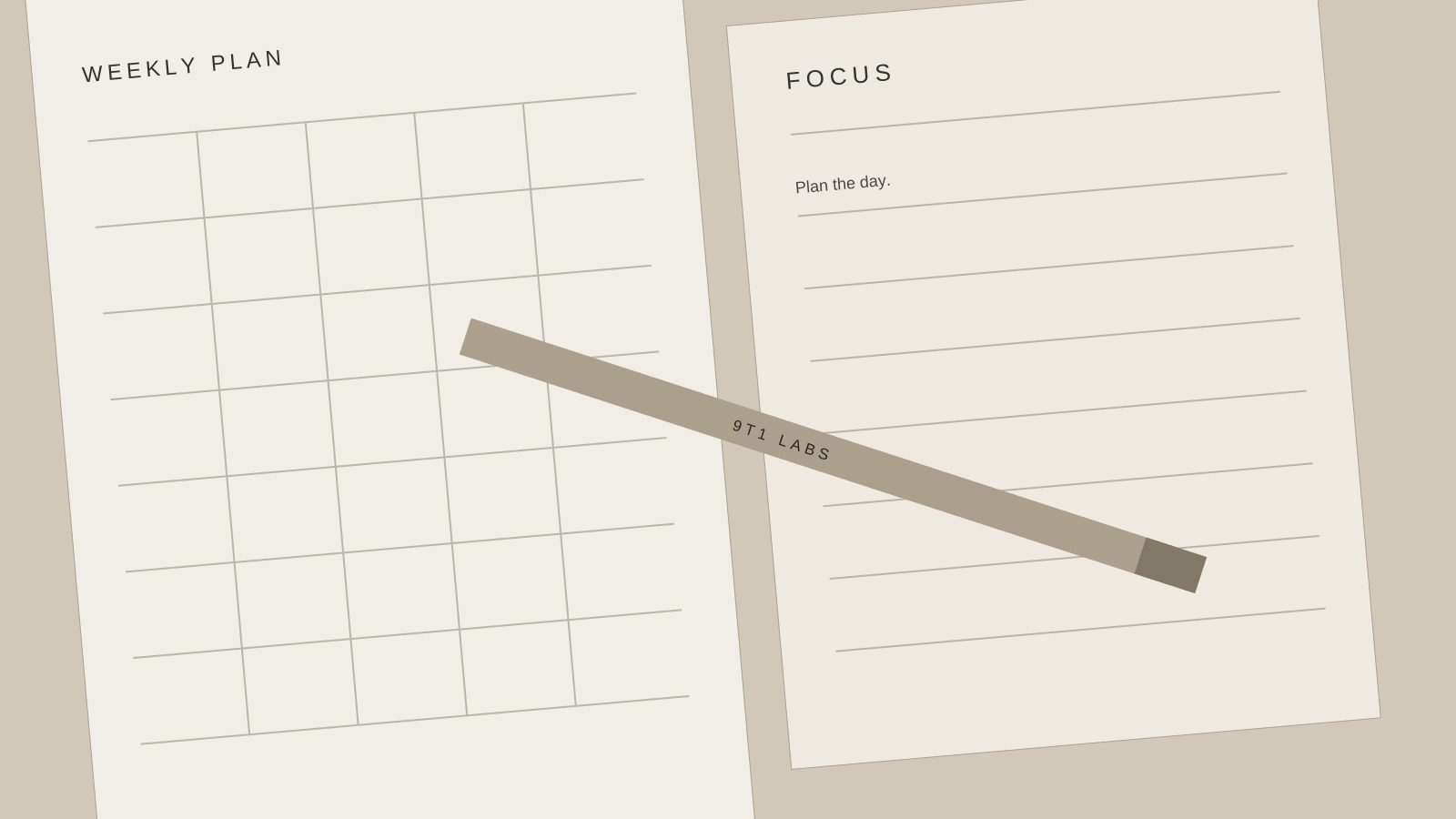
I wanted to explore a weekly plan that behaves like a quiet instrument instead of a crowded task list.
The concept starts with the week, protects focused blocks, and lets everything else sit around them.
Interaction
A small weekly loop.
Five deliberately simple actions shape the concept interaction.
Plan
Choose the important block first.
Editable concept artifact for the planning step. Reveal
Surface the next useful action.
Commit
Record the work without extra ceremony.
Clear
Finish the block and close the loop.
Reset
Start again with a clean week.
System
A focus-first model.
This is a conceptual system map, not a production architecture claim.
Week
- Days
- Time blocks
- Notes
Focus
- Priority
- Duration
- State
Review
- Completed work
- Open notes
- Next week
- Constraint
- Keep the week readable in one view.
- Principle
- Time is the container, not another field.
Tradeoffs
Every choice removes something.
| Constraint | Choice | Consequence |
|---|---|---|
| Limited attention | One focus block per day | Depth over breadth |
| Decision fatigue | Default time blocks | Faster planning with less flexibility |
| Context switching | Next action stays visible | Fewer pivots and more flow |
| Privacy | Local-first concept | More control with more responsibility |
Retrospective
What the concept still gets wrong.
Too much editing
The useful rule may be one primary action, not endless arrangement.
Notes can disappear
The memory of the week needs to remain visible without becoming clutter.
Structure can become pressure
A quiet system must also make room for an unplanned day.
Code evidence
The focus rule in plain language.
chooseFocus(day)
  keep one important block
  place smaller work around it
  leave space for change
review before carrying work forwardStill unresolved
Questions worth keeping open.
Boundaries
Can the tool stay small as more needs appear?
Planning versus doing
How little planning is enough to support action?
Review discipline
How can reflection remain useful when a week gets busy?